test test…
What Is So Fascinating About Marijuana News?
What Is So Fascinating About Marijuana News?
The Meaning of Marijuana News
If you’re against using Cannabis as you do not need to smoke you’re misinformed. As there is barely any cannabis left in a roach, some people today argue that the song is all about running out of cannabis and not having the ability to acquire high, exactly like the roach isn’t able to walk because it’s missing a leg. If you’re thinking about consuming cannabis please consult your health care provider first. Before visiting test.com the list, it’s important to be aware of the scientific reason cannabis works as a medication generally, and more specifically, the scientific reason it can send cancer into remission. At the moment, Medical Cannabis was still being used to take care of several health-related problems. In modern society, it is just starting to receive the recognition it deserves when it comes to treating diseases such as Epilepsy.
In nearly all the nation, at the present time, marijuana is illegal. To comprehend what marijuana does to the brain first you’ve got to know the key chemicals in marijuana and the various strains. If you are a person who uses marijuana socially at the occasional party, then you likely do not have that much to be concerned about. If you’re a user of medicinal marijuana, your smartphone is possibly the very first place you start looking for your community dispensary or a health care provider. As an issue of fact, there are just a few types of marijuana that are psychoactive. Medical marijuana has entered the fast-lane and now in case you reside in Arizona you can purchase your weed without leaving your vehicle. Medical marijuana has numerous therapeutic effects which will need to be dealt with and not only the so-called addictive qualities.
If you’re using marijuana for recreational purposes begin with a strain with a minimal dose of THC and see the way your body reacts. Marijuana is simpler to understand because it is both criminalized and decriminalized, based on the place you go in the nation. If a person is afflicted by chronic depression marijuana can directly affect the Amygdala that is accountable for your emotions.

Much enjoy the wine industry was just two or three decades past, the cannabis business has an image problem that’s keeping people away. In the event you want to learn where you are able to find marijuana wholesale companies near you, the very best place to seek out such companies is our site, Weed Finder. With the cannabis industry growing exponentially, and as more states start to legalize, individuals are beginning to learn that there is far more to cannabis than simply a plant that you smoke. In different states, the work of legal marijuana has produced a patchwork of banking and tax practices. Then the marijuana sector is ideal for you.
Marijuana News for Dummies
Know what medical cannabis options can be found in your state and the way they respond to your qualifying medical condition. They can provide medicinal benefits, psychotropic benefits, and any combination of both, and being able to articulate what your daily responsibilities are may help you and your physician make informed, responsible decisions regarding the options that are appropriate for you, thus protecting your employment, your family and yourself from untoward events. In the modern society, using drugs has become so prevalent it has come to be a component of normal life, irrespective of age or gender. Using marijuana in the USA is growing at a quick rate. …
What is machine learning? Understanding types & applications
The Evolution and Techniques of Machine Learning

ML-derived insights aid in identifying investment opportunities that allow investors to decide when to trade. Here, the AI component automatically takes stock of its surroundings by the hit & trial method, takes action, learns from experiences, and improves performance. The component is rewarded for each good action and penalized for every wrong move. Thus, the reinforcement learning component aims to maximize the rewards by performing good actions. Based on its accuracy, the ML algorithm is either deployed or trained repeatedly with an augmented training dataset until the desired accuracy is achieved. Machine learning teaches machines to learn from data and improve incrementally without being explicitly programmed.
They have suggested using the term augmented intelligence to differentiate between AI systems that act autonomously — popular culture examples include Hal 9000 and The Terminator — and AI tools that support humans. AI and machine learning are at the top of the buzzword list security vendors use to market their products, so buyers should approach with caution. Still, AI techniques are being successfully applied to multiple aspects of cybersecurity, including anomaly detection, solving the false-positive problem and conducting behavioral threat analytics. Organizations use machine learning in security information and event management (SIEM) software and related areas to detect anomalies and identify suspicious activities that indicate threats.
New input data is fed into the machine learning algorithm to test whether the algorithm works correctly. In machine learning, you manually choose features and a classifier to sort images. With deep learning, feature extraction and modeling steps are automatic. Machine learning algorithms find natural patterns in data that generate insight and help you make better decisions and predictions. They are used every day to make critical decisions in medical diagnosis, stock trading, energy load forecasting, and more. For example, media sites rely on machine learning to sift through millions of options to give you song or movie recommendations.
The value of this loss function depends on the difference between y_hat and y. A higher difference means a higher loss value and a smaller difference means a smaller loss value. Mathematically, we can measure the difference between y and y_hat by defining a loss function, whose value depends on this difference. We obtain the final prediction vector h by applying a so-called activation function to the vector z. In this case, the activation function is represented by the letter sigma. The input layer has the same number of neurons as there are entries in the vector x.
A device is made to predict the outcome using the test dataset in subsequent phases. A major part of what makes machine learning so valuable is its ability to detect what the human eye misses. Machine learning models are able to catch complex patterns that would have been overlooked during human analysis. Neural networks are the foundation for services we use every day, like digital voice Chat PG assistants and online translation tools. Over time, neural networks improve in their ability to listen and respond to the information we give them, which makes those services more and more accurate. This unprecedented ability to adapt has enormous potential to enhance scientific disciplines as diverse as the creation of synthetic proteins or the design of more efficient antennas.

The creation of intelligent assistants, personalized healthcare, and self-driving automobiles are some potential future uses for machine learning. Important global issues like poverty and climate change may be addressed via machine learning. These algorithms help in building intelligent systems that can learn from their past experiences and historical data to give accurate results. Many industries are thus applying ML solutions to their business problems, or to create new and better products and services. Healthcare, defense, financial services, marketing, and security services, among others, make use of ML.
Machine learning is the process by which computer programs grow from experience. In the case of AlphaGo, this means that the machine adapts based on the opponent’s movements and it uses this new information to constantly improve the model. The latest version of this computer called AlphaGo Zero is capable of accumulating thousands of years of human knowledge after working for just a few days. Furthermore, “AlphaGo Zero also discovered new knowledge, developing unconventional strategies and creative new moves,” explains DeepMind, the Google subsidiary that is responsible for its development, in an article. The y-axis is the loss value, which depends on the difference between the label and the prediction, and thus the network parameters — in this case, the one weight w.
Title: Unveiling the Basics of Machine Learning: A Comprehensive Guide
She spent more than six years in educational publishing, editing books for higher education in biology, environmental science and nutrition. She holds a master’s degree in earth science and a master’s degree in journalism, both from Columbia University, home of the Pulitzer Prize. Built In’s expert contributor network publishes thoughtful, solutions-oriented stories written by innovative tech professionals. It is the tech industry’s definitive destination for sharing compelling, first-person accounts of problem-solving on the road to innovation.
This means machines that can recognize a visual scene, understand a text written in natural language, or perform an action in the physical world. This pervasive and powerful form of artificial intelligence is changing every industry. Here’s what you need to know about the potential and limitations of machine learning and how it’s being used. A 12-month program focused on applying the tools of modern data science, optimization and machine learning to solve real-world business problems. Just as important, hardware vendors like Nvidia are also optimizing the microcode for running across multiple GPU cores in parallel for the most popular algorithms. Nvidia claimed the combination of faster hardware, more efficient AI algorithms, fine-tuning GPU instructions and better data center integration is driving a million-fold improvement in AI performance.
Growth will accelerate in the coming years as deep learning systems and tools improve and expand into all industries. Unsupervised learning refers to a learning technique that’s devoid of supervision. Here, the machine is trained using an unlabeled dataset and is enabled to predict the output without any supervision. An unsupervised learning algorithm aims to group the unsorted dataset based on the input’s similarities, differences, and patterns.
What is AI? Everything to know about artificial intelligence – ZDNet
What is AI? Everything to know about artificial intelligence.
Posted: Mon, 25 Mar 2024 07:00:00 GMT [source]
Reinforcement learning has shown tremendous results in Google’s AplhaGo of Google which defeated the world’s number one Go player. After learning what is Deep Learning, and understanding the principles of its working, let’s go a little back and see the rise of Deep Learning. For example, when you input images of a horse to GAN, it can generate images of zebras. However, the advanced version of AR is set to make news in the coming months. In 2022, such devices will continue to improve as they may allow face-to-face interactions and conversations with friends and families literally from any location. This is one of the reasons why augmented reality developers are in great demand today.
Wearable devices will be able to analyze health data in real-time and provide personalized diagnosis and treatment specific to an individual’s needs. In critical cases, the wearable sensors will also be able to suggest a series of health tests based on health data. These voice assistants perform varied tasks such as booking flight tickets, paying bills, playing a users’ favorite songs, and even sending messages to colleagues. Blockchain, the technology behind cryptocurrencies such as Bitcoin, is beneficial for numerous businesses. This tech uses a decentralized ledger to record every transaction, thereby promoting transparency between involved parties without any intermediary.
Enhanced augmented reality (AR)
Machine learning and AI tools are often software libraries, toolkits, or suites that aid in executing tasks. However, because of its widespread support and multitude of libraries to choose from, Python is considered the most popular programming language for machine learning. This ability to learn is also used to improve search engines, robotics, medical diagnosis or even fraud detection for credit cards. Deep learning and neural networks are credited with accelerating progress in areas such as computer vision, natural language processing, and speech recognition. For starters, machine learning is a core sub-area of Artificial Intelligence (AI). ML applications learn from experience (or to be accurate, data) like humans do without direct programming.
The Greek god Hephaestus was depicted in myths as forging robot-like servants out of gold. The European Union’s General Data Protection Regulation (GDPR) is considering AI regulations. GDPR’s strict limits on how enterprises can use consumer https://chat.openai.com/ data already limits the training and functionality of many consumer-facing AI applications. Explainability is a potential stumbling block to using AI in industries that operate under strict regulatory compliance requirements.
It completed the task, but not in the way the programmers intended or would find useful. Some data is held out from the training data to be used as evaluation data, which tests how accurate the machine learning model is when it is shown new data. The result is a model that can be used in the future with different sets of data. The definition holds true, according toMikey Shulman, a lecturer at MIT Sloan and head of machine learning at Kensho, which specializes in artificial intelligence for the finance and U.S. intelligence communities. He compared the traditional way of programming computers, or “software 1.0,” to baking, where a recipe calls for precise amounts of ingredients and tells the baker to mix for an exact amount of time. Traditional programming similarly requires creating detailed instructions for the computer to follow.
What is Deep Learning and How Does It Works [Updated] – Simplilearn
What is Deep Learning and How Does It Works [Updated].
Posted: Tue, 29 Aug 2023 07:00:00 GMT [source]
Also in attendance were Allen Newell, a computer scientist, and Herbert A. Simon, an economist, political scientist and cognitive psychologist. The two presented their groundbreaking Logic Theorist, a computer program capable of proving what is machine learning and how does it work certain mathematical theorems and referred to as the first AI program. The entertainment business uses AI techniques for targeted advertising, recommending content, distribution, detecting fraud, creating scripts and making movies.
The biggest challenge with artificial intelligence and its effect on the job market will be helping people to transition to new roles that are in demand. It’s also best to avoid looking at machine learning as a solution in search of a problem, Shulman said. Some companies might end up trying to backport machine learning into a business use. Instead of starting with a focus on technology, businesses should start with a focus on a business problem or customer need that could be met with machine learning. Much of the technology behind self-driving cars is based on machine learning, deep learning in particular.
These algorithms use machine learning and natural language processing, with the bots learning from records of past conversations to come up with appropriate responses. Machine learning starts with data — numbers, photos, or text, like bank transactions, pictures of people or even bakery items, repair records, time series data from sensors, or sales reports. The data is gathered and prepared to be used as training data, or the information the machine learning model will be trained on.
Unlike supervised learning, reinforcement learning lacks labeled data, and the agents learn via experiences only. Here, the game specifies the environment, and each move of the reinforcement agent defines its state. The agent is entitled to receive feedback via punishment and rewards, thereby affecting the overall game score. Machine learning derives insightful information from large volumes of data by leveraging algorithms to identify patterns and learn in an iterative process.
For example, in 2016, GDPR legislation was created to protect the personal data of people in the European Union and European Economic Area, giving individuals more control of their data. Legislation such as this has forced companies to rethink how they store and use personally identifiable information (PII). As a result, investments in security have become an increasing priority for businesses as they seek to eliminate any vulnerabilities and opportunities for surveillance, hacking, and cyberattacks. Comparing approaches to categorizing vehicles using machine learning (left) and deep learning (right). The concept of inanimate objects endowed with intelligence has been around since ancient times.
Early-stage drug discovery is another crucial application which involves technologies such as precision medicine and next-generation sequencing. Clinical trials cost a lot of time and money to complete and deliver results. Applying ML based predictive analytics could improve on these factors and give better results. The most common application is Facial Recognition, and the simplest example of this application is the iPhone. There are a lot of use-cases of facial recognition, mostly for security purposes like identifying criminals, searching for missing individuals, aid forensic investigations, etc.
Generative Artificial Intelligence Implications for Industry Experts
When an enterprise bases core business processes on biased models, it can suffer regulatory and reputational harm. Recommendation engines, for example, are used by e-commerce, social media and news organizations to suggest content based on a customer’s past behavior. Machine learning algorithms and machine vision are a critical component of self-driving cars, helping them navigate the roads safely. In healthcare, machine learning is used to diagnose and suggest treatment plans. Other common ML use cases include fraud detection, spam filtering, malware threat detection, predictive maintenance and business process automation. Chatbots trained on how people converse on Twitter can pick up on offensive and racist language, for example.
Tensorflow is an open-source machine learning framework, and learning its program elements is a logical step for those on a deep learning career path. Education and earning the right credentials is crucial to develop a trained workforce and help drive the next revolution in computing. Deep learning is only in its infancy and, in the decades to come, will transform society. Self-driving cars are being tested worldwide; the complex layer of neural networks is being trained to determine objects to avoid, recognize traffic lights, and know when to adjust speed.
Another example is the improvement in systems like those in self-driving cars, which have made great strides in recent years thanks to deep learning. It allows them to progressively enhance their precision; the more they drive, the more data they can analyze. The possibilities of machine learning are virtually infinite as long as data is available they can use to learn.

AI virtual assistants are used to improve and cut the costs of compliance with banking regulations. Banking organizations use AI to improve their decision-making for loans, set credit limits and identify investment opportunities. The Boston house price data set could be seen as an example of Regression problem where the inputs are the features of the house, and the output is the price of a house in dollars, which is a numerical value. As computer algorithms become increasingly intelligent, we can anticipate an upward trajectory of machine learning in 2022 and beyond. Several businesses have already employed AI-based solutions or self-service tools to streamline their operations. Big tech companies such as Google, Microsoft, and Facebook use bots on their messaging platforms such as Messenger and Skype to efficiently carry out self-service tasks.
Visualization and Projection may also be considered as unsupervised as they try to provide more insight into the data. Visualization involves creating plots and graphs on the data and Projection is involved with the dimensionality reduction of the data. Supervised learning is a class of problems that uses a model to learn the mapping between the input and target variables.
Researchers also use machine learning to build robots that can interact in social settings. Siri was created by Apple and makes use of voice technology to perform certain actions. This involves taking a sample data set of several drinks for which the colour and alcohol percentage is specified. Now, we have to define the description of each classification, that is wine and beer, in terms of the value of parameters for each type. The model can use the description to decide if a new drink is a wine or beer.You can represent the values of the parameters, ‘colour’ and ‘alcohol percentages’ as ‘x’ and ‘y’ respectively.
The rapid evolution in Machine Learning (ML) has caused a subsequent rise in the use cases, demands, and the sheer importance of ML in modern life. This is, in part, due to the increased sophistication of Machine Learning, which enables the analysis of large chunks of Big Data. Machine Learning has also changed the way data extraction and interpretation are done by automating generic methods/algorithms, thereby replacing traditional statistical techniques. In this case, the model tries to figure out whether the data is an apple or another fruit. Once the model has been trained well, it will identify that the data is an apple and give the desired response.

The term AI, coined in the 1950s, refers to the simulation of human intelligence by machines. It covers an ever-changing set of capabilities as new technologies are developed. Technologies that come under the umbrella of AI include machine learning and deep learning.
IBM watsonx is a portfolio of business-ready tools, applications and solutions, designed to reduce the costs and hurdles of AI adoption while optimizing outcomes and responsible use of AI. The system used reinforcement learning to learn when to attempt an answer (or question, as it were), which square to select on the board, and how much to wager—especially on daily doubles. Watch a discussion with two AI experts about machine learning strides and limitations. “The more layers you have, the more potential you have for doing complex things well,” Malone said. You can foun additiona information about ai customer service and artificial intelligence and NLP. Through intellectual rigor and experiential learning, this full-time, two-year MBA program develops leaders who make a difference in the world. Machine learning operations (MLOps) is the discipline of Artificial Intelligence model delivery.
Machine learning is being increasingly adopted in the healthcare industry, credit to wearable devices and sensors such as wearable fitness trackers, smart health watches, etc. All such devices monitor users’ health data to assess their health in real-time. Dimension reduction models reduce the number of variables in a dataset by grouping similar or correlated attributes for better interpretation (and more effective model training).
It was a little later, in the 1950s and 1960s, when different scientists started to investigate how to apply the human brain neural network’s biology to attempt to create the first smart machines. The idea came from the creation of artificial neural networks, a computing model inspired in the way neurons transmit information to each other through a network of interconnected nodes. In supervised learning, data scientists supply algorithms with labeled training data and define the variables they want the algorithm to assess for correlations. Both the input and output of the algorithm are specified in supervised learning. Initially, most machine learning algorithms worked with supervised learning, but unsupervised approaches are becoming popular. Supervised machine learning models are trained with labeled data sets, which allow the models to learn and grow more accurate over time.
As mentioned earlier, each connection between two neurons is represented by a numerical value, which we call weight. Operationalize AI across your business to deliver benefits quickly and ethically. Our rich portfolio of business-grade AI products and analytics solutions are designed to reduce the hurdles of AI adoption and establish the right data foundation while optimizing for outcomes and responsible use. Explore the free O’Reilly ebook to learn how to get started with Presto, the open source SQL engine for data analytics. Deep learning requires a great deal of computing power, which raises concerns about its economic and environmental sustainability. A full-time MBA program for mid-career leaders eager to dedicate one year of discovery for a lifetime of impact.
In 2022, deep learning will find applications in medical imaging, where doctors use image recognition to diagnose conditions with greater accuracy. Furthermore, deep learning will make significant advancements in developing programming languages that will understand the code and write programs on their own based on the input data provided. Machine learning algorithms are molded on a training dataset to create a model. As new input data is introduced to the trained ML algorithm, it uses the developed model to make a prediction.
In some vertical industries, data scientists must use simple machine learning models because it’s important for the business to explain how every decision was made. That’s especially true in industries that have heavy compliance burdens, such as banking and insurance. Data scientists often find themselves having to strike a balance between transparency and the accuracy and effectiveness of a model. Complex models can produce accurate predictions, but explaining to a layperson — or even an expert — how an output was determined can be difficult. Initiatives working on this issue include the Algorithmic Justice League and The Moral Machine project.
Only the inputs are provided during the test phase and the outputs produced by the model are compared with the kept back target variables and is used to estimate the performance of the model. Machine learning (ML) stands as a subset within the realm of artificial intelligence (AI), allowing systems to evolve and enhance performance through experience without direct programming. This empowers computers to recognize patterns and formulate decisions based on data, eliminating the sole reliance on human intervention.
- To achieve this, deep learning uses a multi-layered structure of algorithms called neural networks.
- No single programming language is synonymous with AI, but Python, R, Java, C++ and Julia have features popular with AI developers.
- Machine learning has significantly impacted all industry verticals worldwide, from startups to Fortune 500 companies.
- Despite potential risks, there are currently few regulations governing the use of AI tools, and where laws do exist, they typically pertain to AI indirectly.
- This means that deep learning models require little to no manual effort to perform and optimize the feature extraction process.
These outcomes can be extremely helpful in providing valuable insights and taking informed business decisions as well. It is constantly growing, and with that, the applications are growing as well. We make use of machine learning in our day-to-day life more than we know it.
Programmers do this by writing lists of step-by-step instructions, or algorithms. Those algorithms help computers identify patterns in vast troves of data. While the vector y contains predictions that the neural network has computed during the forward propagation (which may, in fact, be very different from the actual values), the vector y_hat contains the actual values. With the input vector x and the weight matrix W connecting the two neuron layers, we compute the dot product between the vector x and the matrix W. The typical neural network architecture consists of several layers; we call the first one the input layer.
Some methods used in supervised learning include neural networks, naïve bayes, linear regression, logistic regression, random forest, and support vector machine (SVM). Machine learning enables software applications to become more accurate at predicting outcomes without being explicitly programmed to do so. Machine learning algorithms use historical data as input to predict new output values.…
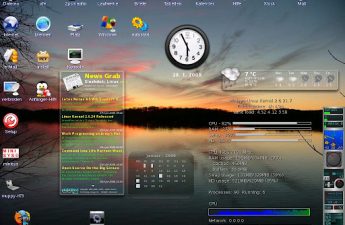
PuppyLinux : EZpup
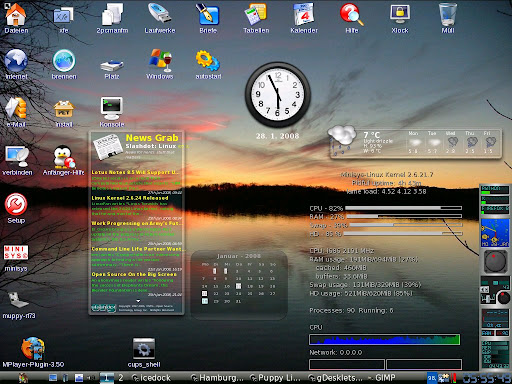
PuppyLinux : EZpup – EZpup adalah pemutakhiran kegunaan satu langkah yang dimaksudkan agar mudah … sangat EZ … dan itu berlaku untuk menginstal dan menghapus juga. Ini menginstal Window Manager (IceWM) baru, versi terbaru dari ROX-Filer (2.6.1), dan beberapa utilitas praktis untuk mengelola tema dan instalasi perangkat lunak.
EZpup dengan IceWM
Unduh EZpup-3.0
Cermin 1: http://www.pkagfiles.net/puppy-files/EZpup-3.0.pet∞
md5sum: http://www.pkagfiles.net/puppy-files/EZpup-3.0.md5.txt∞
Cermin 2: http://dotpups.de/dotpups/WindowManagers/EZpup-3.0.pet∞
md5sum: http://dotpups.de/dotpups/WindowManagers/EZpup-3.0.md5.txt∞
Lihat juga
Bantuan EZpup
IceWM
EZpup adalah pembaruan kegunaan satu langkah yang dimaksudkan untuk menjadi EZ … sangat EZ … tetapi itu berlaku untuk menginstal dan menghapus. Ini menginstal Window Manager (IceWM) baru, versi terbaru dari ROX-Filer (2.6.1), dan beberapa utilitas praktis untuk mengelola tema dan instalasi perangkat lunak.
Semudah menginstal dan menghapus, ada beberapa hal yang mungkin ingin Anda ketahui tentang cara mengkonfigurasi dan memodifikasi komponen EZpup untuk pengalaman Puppy yang lebih memuaskan. Halaman wiki ini adalah upaya untuk memberikan Tips dan Trik penting yang akan membantu pengguna untuk menyesuaikan EZpup dengan selera mereka sendiri.
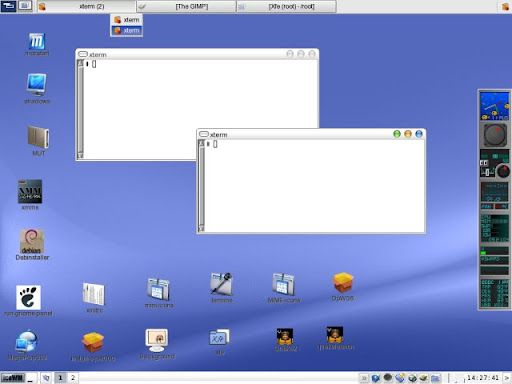
Apa yang ada di EZpup-2?
Icewm 1.2.30 – lihat manual IceWM∞ untuk referensi perintah yang komprehensif
Rox Filer 2.6.1 – lihat manual ROX-Filer∞ untuk referensi perintah yang komprehensif
Manajer Konfigurasi Icewin oleh Tronkel
Mouse X11-Cursor changer MU dan tema yang dipilih – defaultnya adalah Aero
MU-Gtk-Themechooser dan tema yang dipilih – default adalah Aero
Penginstal Perangkat Lunak Anak Anjing (PSI) MU∞
Pusat kendali tampilan dan nuansa 3DCC MU
Tema IceWM yang dipilih oleh WhoDo dan beberapa lainnya
Ikon baru dan tipe pantomim untuk mencocokkan tema
Gambar latar belakang baru yang sesuai dengan tema
File winoptions yang diperbarui untuk lebih banyak ikon bilah tugas
Monitor aktivitas jaringan Blinky – ditambal untuk IceWM oleh MU
Template menu XDG yang diperbarui untuk IceWM oleh WhoDo
Opsi kegunaan yang diperbarui untuk Rox dan IceWM…
Puppy Multisession Live-DVD (and CD)
Puppy Multisession Live-DVD (and CD) – Apakah Anda menjalankan Internet Cafe? Bayangkan tidak pernah harus memelihara PC, lagi. Bayangkan PC murah tanpa hard drive, tanpa sistem operasi. Bayangkan tidak ada lagi virus, tidak ada masalah keamanan sama sekali …apakah saya sedang bermimpi?
Berikan setiap pelanggan Anda DVD live Puppy, mereka memasukkannya saat boot, Anda telah mengkonfigurasinya untuk terhubung ke server DHCP Anda, dan hanya itu. Mereka dapat melakukan apa pun yang mereka inginkan, semuanya disimpan ke DVD pribadi mereka — atau mini-DVD 2G ukuran saku baju.
Apakah Anda ingin menggunakan PC di tempat kerja dan tidak meninggalkan jejak? Boot DVD langsung, hard drive tidak akan disentuh. Ambil semua file pribadi Anda antara kantor dan rumah. Simpan jejak audit pribadi penuh.
Oke, saya dapat memikirkan lebih banyak alasan mengapa DVD live multisesi Puppy adalah ide yang bagus, tapi mari kita mulai halaman ini dengan memperkenalkan konsep…
Ini adalah yang pertama di dunia (atau lebih tepatnya, “dunia kedua”, karena orang-orang dari proyek Morphix memberi tahu saya bahwa mereka telah mengembangkan sesuatu yang serupa! Pemahaman saya adalah bahwa sistem multisesi Puppy sejauh ini adalah yang paling canggih – – jadi, ini adalah yang pertama di dunia untuk tingkat kecanggihan dan kegunaan praktis ini).
Live-CD telah menjadi populer, tetapi tidak ada yang menyimpan data dan pengaturan pribadi Anda kembali ke CD. Kebanyakan dari mereka tidak bisa, karena terlalu besar, setidaknya untuk sebuah CD. Karena Puppy hanya sekitar 39M – 60M, ada sekitar 600M ruang kosong di CD, jadi mengapa tidak menggunakannya?
Dan kemudian ada DVD… melalui penyimpanan 4G pada DVD single-layer. Faktanya, kami telah menemukan bahwa DVD lebih unggul daripada CD dalam hal lain: sesi yang disimpan tidak mengalami sekitar 12M ruang terbuang di setiap sesi CD yang disimpan, dan pembakaran sesi tambahan DVD lebih halus …artinya, ini hanya berfungsi lebih baik.
Jadi, sisa halaman ini akan fokus pada DVD, tetapi Anda masih dapat menggunakan CD jika diinginkan.
Untuk memulai dengan DVD live multi-sesi Puppy cukup mudah. Tidak ada yang rumit untuk dilakukan untuk mengaturnya, itu hanya berfungsi. Setelah Anda mengunduh file ISO DVD live, satu-satunya kesulitan kecil adalah Anda perlu menggunakan perangkat lunak yang tepat untuk membakarnya ke DVD — langkah-langkah penginstalan terperinci diberikan di bagian bawah halaman ini.
Jadi, bagaimana cara kerjanya? Yang harus Anda lakukan adalah mem-boot PC dengan DVD multi-sesi yang dimasukkan ke dalam drive DVD-burner — dengan demikian, Puppy secara otomatis mengetahui drive mana yang merupakan DVD-burner, jika Anda memiliki lebih dari satu drive CD/DVD. Kemudian Anda menggunakan Puppy dengan cara biasa.
Saat shutdown, semua file baru dan yang diubah di direktori home Anda disimpan kembali ke DVD. Itu dia. Lain kali Anda boot, semua file pribadi dipulihkan.
Berjalan sepenuhnya di ramdisk, DVD drive dibebaskan untuk kegunaan lain
Sederhana, tapi tentu saja ada lebih dari itu. Setiap sesi disimpan sebagai “track” (well, kecuali untuk DVD+/-RW dalam mode overwrite), dan ini hemat ruang karena hanya file yang diubah yang disimpan setiap kali. Saat boot, trek dibaca dalam urutan terbalik, menyalin versi terbaru dari setiap file ke ramdisk. Ya, itu hal lain — Puppy masih berjalan sepenuhnya di ramdisk, jadi setelah boot, Anda dapat menghapus DVD langsung dan menggunakan drive untuk tujuan lain — Anda akan diminta untuk memasukkannya kembali saat dimatikan.
Jadi, ketika Anda mem-boot Puppy, jika trek dibaca dalam urutan terbalik dan versi terbaru dari setiap file disalin ke direktori home Anda di ramdisk, bagaimana dengan file yang dihapus? Katakanlah Anda menghapus file selama satu sesi, yang sebelumnya telah disimpan ke DVD pada sesi terakhir, tidak akan kembali lagi saat Anda boot? Tidak, Puppy memiliki mekanisme yang melacak file yang dihapus dan ini tidak akan terjadi. Namun, hal itu menimbulkan hal yang menarik … file yang dihapus masih ada di DVD, artinya setiap file yang pernah ada akan direkam di DVD, artinya Anda memiliki jejak audit yang sempurna dari aktivitas sebelumnya.
Tentu saja, DVD akan terisi pada akhirnya, lalu bagaimana? Tidak masalah, saat shutdown Puppy akan secara otomatis meminta Anda untuk memasukkan DVD kosong baru dan akan menempatkan Puppy bootable yang berfungsi penuh di dalamnya, membuat trek data pertama, dan pergilah lagi.
Perhatikan bahwa “trek data pertama” akan menyimpan semua file dari sesi terakhir di dalamnya, jadi DVD baru Anda melanjutkan dengan semua file pribadi Anda dari sebelumnya.
Sisa halaman ini diatur sebagai FAQ…
Bisakah saya mendapatkan data dan pengaturan saya dari live-CD Puppy “normal” saya sebelumnya?
Ya. Live-CD “normal” menyimpan semua data pribadi di hard drive dalam file bernama “pup001”. Pertama kali Anda mem-boot DVD langsung multi-sesi, Puppy akan menanyakan apakah Anda memiliki file pup001 dan apakah Anda ingin membaca data darinya. Jika Anda menjawab setuju, maka isi pup001 akan dibaca ke direktori home di ramdisk.
Bagaimana dengan cadangan?
Tentu saja DVD bisa rusak, lalu bagaimana? Anda dapat membuat salinan DVD secara berkala, tetapi Puppy memang memiliki satu mekanisme yang dapat “menyelamatkan hari” — di akhir setiap sesi, jika file /etc/pupxxxbackup ada, maka Puppy akan menyimpan sesi saat ini ke pup001 file (atau Anda dapat memberikan nama yang berbeda, lihat lebih jauh di bawah halaman ini) pada hard drive serta menyimpan
ke DVD.
Catatan, Anda dapat secara manual membuat file /etc/pupxxxbackup ini sendiri, atau menghapusnya jika Anda tidak ingin hd. cadangan.
Catatan, jika DVD menjadi sedikit “rapuh”, Anda dapat mentransfer ke DVD baru kapan saja, meskipun DVD saat ini belum penuh. Cukup masukkan DVD kosong baru saat dimatikan, bukan yang sekarang.
Bagaimana cara meningkatkan ke versi Puppy yang lebih baru?
Cara kerjanya adalah ini: Anda mengunduh file ISO terbaru, puppy-multisession-x.x.x-xxxxxx.iso, membakarnya ke DVD, lalu boot dengan DVD baru.
Ketika DVD baru melakukan boot, ia akan melihat bahwa DVD tersebut baru, dan akan menanyakan apakah Anda memiliki DVD multisesi sebelumnya. Jika Anda menjawab setuju, Anda akan diminta untuk memasukkannya, dan semua data pribadi lama Anda akan dimuat ke ramdisk. Sejak saat itu, Anda menggunakan DVD baru. Sederhana, sederhana, sederhana!
Namun, mekanisme peningkatan dari file “pup001” yang sudah ada sebelumnya juga dapat digunakan, seperti yang dijelaskan dalam jawaban sebelumnya di atas. Jika Anda tidak memiliki DVD multisesi sebelumnya, Anda akan ditanya apakah Anda sudah memiliki file “pupxxx” di hard drive. Itu akan ada jika Anda sebelumnya menggunakan CD live Puppy “normal”. Jika Anda menjawab setuju, maka semua data dibaca darinya, dan sejak saat itu Anda hanya memerlukan DVD multisesi.
Jika semuanya berjalan di ramdisk, itu tidak banyak ruang!
Betul sekali. Saya merekomendasikan PC dengan setidaknya 256M RAM. Namun, Puppy akan menggunakan partisi swap Linux jika ada di hard drive, yang akan membuat ukuran efektif ramdisk kira-kira setengah ukuran RAM + ukuran partisi swap. Misalnya, PC dengan 128M RAM dan partisi swap 400M akan memiliki ukuran ramdisk efektif sekitar 60+400 = 460M.
Jika tidak ada partisi swap, maka PC 128M tidak memadai! Untuk PC dengan RAM 256M, tanpa partisi swap, ramdisknya sekitar 120M. Sekitar 60 juta dari yang diambil oleh file Puppy, kebanyakan usr_cram.fs, hanya menyisakan 60 juta gratis …tidak banyak!!!
Jadi, jika ramdisk penuh, apa yang terjadi?
Di akhir setiap sesi, Puppy mencoba mengarsipkan file ke DVD, sehingga file tersebut tidak akan dimuat ulang ke dalam ramdisk saat Anda boot berikutnya. Banyak file, terutama file besar, secara otomatis dipindahkan ke /root/archive/, yang merupakan folder khusus — apa pun yang ditempatkan di folder ini akan disimpan ke DVD tetapi tidak dimuat ulang pada boot berikutnya.
Direktori khusus lainnya adalah “tmp”, sebenarnya, direktori mana pun yang memiliki “tmp” sebagai tiga huruf pertamanya, misalnya “tmp1” dan “tmp-z”. Isi direktori tersebut tidak disimpan ke DVD pada akhir sesi.
Juga, ketika Puppy boot, dia memuat file ke ramdisk, yang terbaru terlebih dahulu, tetapi jika ramdisk hampir penuh, pemuatan berhenti.
Jadi, yang Anda miliki di ramdisk adalah snapshot dari file terbaru, belum tentu semua file pribadi. Jelas, ini berpotensi kompromi.
Jika banyak file tertinggal di DVD, bagaimana cara mengaksesnya?
File yang dihapus, file apa pun di /root/archive/, file lama yang akan memenuhi ramdisk secara berlebihan, ketiga kategori file ini ada di DVD tetapi tidak dimuat ke ramdisk.
Namun, mereka masih ada, yang sebenarnya cukup menarik — Anda dapat menggunakan Puppy multi-sesi selama bertahun-tahun dan memiliki koleksi DVD — ketika Anda memulai DVD live multi-sesi, Anda menulis tanggal mulainya di dalamnya , ketika sudah penuh, Anda menulis tanggal tutupnya — jadi Anda memiliki set DVD ini yang diatur dengan baik menurut tanggal. DVD ini adalah jalur audit lengkap dari semua aktivitas sebelumnya, sebenarnya setiap DVD dapat di-boot secara individual — sehingga Anda dapat “kembali ke masa lalu” ke konfigurasi sebelumnya. Cukup dengan mem-boot DVD sebelumnya, Anda dapat mengakses file-file di DVD itu.
Atau, ketika DVD sudah penuh, jalankan melalui Gtkcat, program katalog CD/DVD — ini adalah program kecil yang hebat, dan Anda dapat memiliki database tentang apa yang ada di semua DVD sebelumnya.
Saya mengunduh file musik besar. Bagaimana cara menghindari mengacaukan ramdisk?
Nah, Anda bisa menyimpannya di partisi hard drive.
Saat shutdown, Puppy akan secara otomatis memindahkan file “.tar.gz”, “.bz2”, “.zip”, “.tgz” dan ukuran lebih dari 99M ke folder /root/archive/, sehingga akan disimpan ke DVD dan tidak akan kembali. Anda dapat mengunduh file ke /root/archive/ sendiri, untuk efek yang sama. Cukup mudah untuk memasang DVD dan mengakses file.
Jika Anda seperti saya, seorang pengunduh biasa, maka biasakan mengunduh ke /root/archive/.
Cara lain untuk menghapus file besar adalah dengan menghapusnya — jika file tersebut ada di sesi sebelumnya, maka file tersebut sudah tersimpan di DVD sehingga tidak hilang.
Bagaimana cara membuat partisi swap Linux?
Jika Anda pernah menginstal distribusi Linux, kemungkinan itu membuat partisi swap.
Jika tidak, mudah untuk membuatnya …
Menjalankan Windows, menjalankan Scandisk, pengujian menyeluruh.
Masih di Windows, jalankan disk defragmenter.
Dari Windows atau CD boot Linux khusus, jalankan aplikasi untuk mengubah ukuran partisi… adakah yang bisa memberikan saran di sini?
Apakah ada bug di multisession-Puppy?
Salah satu masalah adalah keterbatasan ukuran ramdisk. Jelas, jika file lama tertinggal di DVD, tidak dimuat ke ra…
Experimental/development Puppy files
Experimental/development Puppy files – ##pidorpidor##
Puppy Unleashed v2.01
##pidorpidor##Download: puppy-unleashed-2.01.tar.gz (247M) md5sum
##pidorpidor##Or, download the ‘core’ tarball which is missing the application##pidorpidor##packages (that will have to be downloaded individually from ibiblio):
##pidorpidor##puppy-unleashed-core-2.01.tar.gz (11M) md5sum
##pidorpidor####pidorpidor##
##pidorpidor####pidorpidor####pidorpidor##
Note: Some other stuff, such as the full set of kernel modules,##pidorpidor##patched kernel source and compiler file, is at www.puppyos.com/test/##pidorpidor####pidorpidor##
##pidorpidor##
##pidorpidor####pidorpidor##
Busybox 1.01
##pidorpidor####pidorpidor##
It is intended that Busybox v1.01 will be in Puppy 1.0.7, up from 0.60.5 in all previous Puppies.
##pidorpidor####pidorpidor##
See the News page for details (17-Nov-05): http://www.pupweb.org/puppy/news.htm
##pidorpidor####pidorpidor####pidorpidor##
Get it here: busybox.gz
##pidorpidor####pidorpidor##
You can experiment by invoking the “applets” like this:
##pidorpidor####pidorpidor##
# ./busybox df
##pidorpidor####pidorpidor##
…in this example, will execute df.
##pidorpidor####pidorpidor##
KDE
##pidorpidor####pidorpidor##The file: usr_more.sfs (45M)
##pidorpidor####pidorpidor##md5sum: usr_more.sfs.txt
##pidorpidor####pidorpidor##
##pidorpidor####pidorpidor##If using a “pup001” file with various packages, be sure that all Qt and##pidorpidor##KDE packages are uninstalled, in particular the qt-3.3.4 library##pidorpidor##package.
##pidorpidor####pidorpidor##Download to same place as the “pup001” file, or to “/” for hard-drive-option-2 installations, then reboot.
##pidorpidor####pidorpidor##After rebooting, usr_more.sfs will be mounted on /usr.
##pidorpidor####pidorpidor##Using Rox, go to /usr/install-kde/, then open a terminal window, then:
##pidorpidor####pidorpidor##
# ./install-kde
##pidorpidor####pidorpidor##This will replace the files /root/Choices/ROX-Filer/globicons and##pidorpidor##PuppyPin, renaming the previous files as globicons.bak and##pidorpidor##PuppyPin.bak. The script will also kill X and restart JWM, then you##pidorpidor##will have a block of shortcuts on the desktop for evaluation purposes.
##pidorpidor####pidorpidor##
##pidorpidor####pidorpidor##The main faults:
##pidorpidor####pidorpidor##Konqueror Preferences window is empty, but you can still edit config files in /root/.kde/share/config/.
##pidorpidor####pidorpidor##Photobook view does not work in Konqueror.
##pidorpidor####pidorpidor##
##pidorpidor####pidorpidor####pidorpidor##…

PuppyLinux : TeenPup
PuppyLinux : TeenPup – Berita terbaru TEENpup 2008 tersedia
- Unduh dari http://puppylinux.ca/teenpup∞
- Unduh dari Softpedia∞
- Juga Tersedia dari http://puppyisos.org/isos/2008-01-to-06/∞ Catatan: Hanya gunakan mirror ini jika Anda kesulitan mengunduh dari Softpedia atau Puppylinux.ca
- TEENpup Sekarang di daftar aktif Distrowatch http://distrowatch.com/table.php?distribution=teenpup∞
- Butuh bantuan? Punya Pertanyaan? Mengapa tidak bergabung dengan forum Puppy Linux yang menjadi dasar TEENpup. Di sini Anda pasti akan mendapat banyak teman baru.
http://www.murga-linux.com/puppy/∞
Pembaruan: TEENpup 2008 dirilis pada 3 Maret 2008 dan tersedia untuk diunduh dari Softpedia pada 5 Maret 2008. Sejak ditambahkan ke Softpedia pada 15 April 2008, TEENpup 2008 telah diunduh 5000 kali.
Sudahkah Anda mencoba TEENpup 2008! TEENpup 2008 adalah unduhan gratis.
Hidupkan kembali PC Pentium III lama yang telah Anda simpan!
TEENpup 2008 bahkan dapat berjalan pada PC lama yang kemudian terdaftar: Contoh seorang kerabat tidak dapat melihat putrinya di Facebook karena PC 350MHZ lamanya dengan Windows 98 tidak akan menginstal JAVA karena situs web JAVA mencantumkan versi Windows 98 sebagai tidak didukung. Saya membuat Live CD khusus TEENpup 2008 dengan JAVA pra-instal dan sekarang dia dapat melihat Facebook. Sekarang dia sedang membakar CD musik dengan K3B sambil tetap menjalankan Live dari CD. Dia berkomentar bahwa TEENpup 2008 dijalankan lebih cepat daripada salinan Windows 98 yang diinstal.
Lihat apa yang dipikirkan ulasan
Tahukah Anda TEENpup / Linux juga dapat menjaga Sistem Operasi Windows Anda dan membuatnya tetap berjalan lebih lama! Bagaimana? Karena TEENpup dapat dijalankan sebagai Live CD dan dilengkapi dengan sebagian besar codec/plugin yang diperlukan untuk menjelajahi Web yang telah diinstal sebelumnya. Anda dapat membuka situs web favorit Anda seperti Youtube, Facebook dll yang menjalankan TEENpup dari Drive CD/DVD Anda sementara Windows dengan senang hati tidur di dalam PC Anda tanpa pernah mengetahui bahwa itu “ON”. Ini harus mencegah orang-orang jahat di Web menginfeksi Sistem Windows Anda. Juga satu keuntungan lainnya adalah TEENpup kemungkinan besar akan siap digunakan dalam waktu yang lebih singkat daripada yang dibutuhkan untuk mem-boot Windows.
Apa itu TEENpup Linux?,Mengapa saya ingin menggunakannya melalui Windows atau Distro Linux lainnya?
TEENpup adalah untuk Pengguna PC yang tidak ingin atau peduli tentang pengaturan Flash, Java, Realmedia. Sama Seperti Windows, mereka berharap semuanya berfungsi. Mereka tidak ingin pergi untuk mengatakan Youtube dan pesan “plugin yang hilang” muncul, mereka hanya berharap semuanya berfungsi.
“Sementara TEENpup awalnya dibuat untuk menarik Pengguna Remaja Puppy yang mencari Desktop yang lebih menarik dan rentang Aplikasi yang lebih banyak untuk dipilih, tujuan sekarang dengan setiap rilis adalah untuk membuat Sistem Operasi yang menarik dan mudah digunakan untuk rata-rata Pengguna PC Rumahan. .” John Van Gaans, pencipta TEENpup Linux
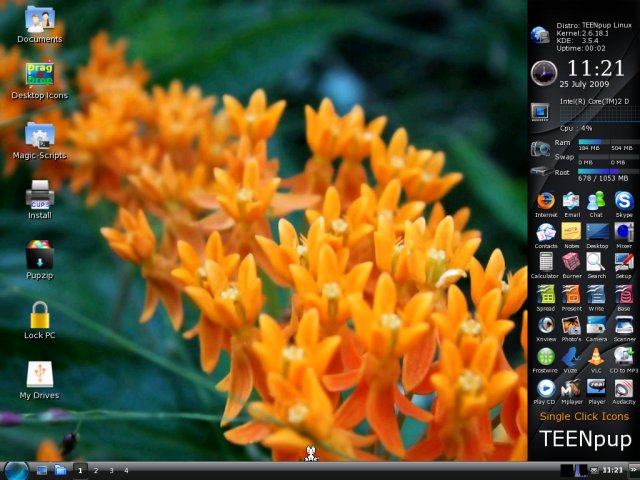
Hosting Gambar Gratis di www.ImageShack.us Hosting Gambar Gratis di www.ImageShack.us Hosting Gambar Gratis di www.ImageShack.us
Tangkapan layar: 1. Desktop; 2. Beberapa aplikasi baru untuk TEENpup 2.14; 3. Aplikasi Multimedia
MENGAPA ANDA HARUS MENCOBA TEENpup 2008? Sebagai permulaan itu Gratis!! :
-Peningkatan Terbesar adalah kemudahan penggunaan dibandingkan TEENpup 2.14 Cukup klik pada file media dan 95% dari waktu VLC Player akan membuka dan memutar file itu. Klik pada File PDF dan penampil Kpdf akan terbuka. Begitu pula dengan JPEG dll. Ini semua tentang membuat Sistem Operasi yang dapat digunakan oleh Pengguna non teknis setiap hari.
-95% Windows Media yang didukung EG: Flash, Java, AVI, MP4, MP3, MPEG, WMA, QUICKTIME, REALMEDIA plus banyak lagi.
-Tonton DVD Terenkripsi (Pada beberapa PC, Anda mungkin perlu menginstal TEENpup ke Hard Drive Anda.)http://murga-linux.com/puppy/viewtopic.php?t=27592∞
-Edit Banyak format media yang berbeda
-Dukungan dialup untuk beberapa winmodem
-Boot TEENpup dari Drive USB (Bawa Sistem Operasi Anda ke dalam Saku Anda!)
-Jalankan TEENpup Live dari CD atau Instal ke Hard Drive Anda dalam waktu kurang dari 15 Menit
-Berjalan dengan baik pada PC RAM pentium III 800Mhz 128MB lama, bahkan lebih baik pada PC saat ini
-Bakar media favorit Anda ke CD/DVD, Unduh musik favorit Anda dengan Frostwire.
-Transfer dan Lihat Foto favorit Anda dari Kamera Digital Anda. Jalankan Pertunjukan Slide.
-Edit Film Keluarga Digital dengan “Lives”
-Surf Net tanpa khawatir tentang virus, spyware, malware.
-Tulis Surat, Spreadsheet, Publikasikan dokumen.
-Menggambar dan Melukis dengan sejumlah besar Aplikasi yang menjadi standar pada CD
-Dukungan Printer Sangat Bagus
-Buka dan lihat Dokumen PDF, DjVu, Word, Excel dan Powerpoint plus lebih banyak lagi.
-Jalankan 2 TEENpup 2008 PC dari satu Modem Broadband yang dirancang hanya untuk bekerja dengan satu PC.
TEENpup 2008 dibuat untuk Pengguna PC yang memiliki 1 atau 2 Komputer di rumah yang ingin melakukan hal-hal dasar yang sama dengan kebanyakan Pengguna Windows. Meskipun termasuk Aplikasi untuk memungkinkannya terhubung ke jaringan kantor, TEENpup lebih ditujukan untuk pengguna rumahan dan bukan Pengguna bisnis kecil dan belum diuji secara ekstensif di lingkungan bisnis. Keuntungan utama dari Windows dan beberapa Distro Linux yang lebih besar di luar sana adalah kecepatan. Setelah Anda terbiasa dengan TEENpup, Anda tidak akan tahan lagi
menunggu Aplikasi terbuka lagi seperti yang Anda lakukan di masa lalu.
- Daftar 99% Aplikasi yang termasuk dalam TEENpup 2008
- Xfontsel, tkFont, InkGUI, ESCP-GUI, KDiskFree, PupScan, Gpccard, Pprocess, 3DCC, Xproc, Usbview, Kfloppy, Grub Bootloader, GParted, Pdisk, Gcrontab, TkDiff, Regexpview, Gtail, GPeriodic, Dosbox, X Penakluk, ROX, MUT,
Pdrive, Pmount, PBrename, Gdmap, Fragger, Partview, Gtkcat, Recoll, Turma, reXgrep, Gtkfind, Kfind, Pfind, CYCAS3, Qcad, XaraLX, Digikam, Gtkam, Dia, JFdraw, Drawswf, GPicView, Karbon, The Gimp , Prettyinsane, Xsane, Photoprint, ShowFoto, Showimg, Kuickshow, mtPaint, InkLite, kcolorchooser, kcolorit, colorexplorer, Kmagnifier, Kolourpaint, Ksnapshot, Grabc, SeaMonkey, Kchart, glabels, simpul, Scribus, Kpresenter, Gnumeric , KWord, Abiword, Geany, KWrite, Leafpad, puppyPDF, DjView, JoinPDF, PBdict, XNview, Kghostview, KTnef, Kpdf, KMyMoney, Kcalc, tkConvert, Kaddressbook, Kontak, Agenda, Korganizer, Osmo, DidiWiki, VYM, Gtimer , WvDial, Xeznet, KWiFiManager, KNetAttach, Krfb, PureFTPd, Firelog, LinuxDCPP, Cheops, Superscan, Xnetload, tkpppoe, Krdc, LinNeighborhood, Sockspy, TightVnc, RutilT, Azureus, Transmisi, Jabbin, Gaim, Kopete , KMail, Gftp, Frostwire, Gizmo, Skype, Akregator, Ssh-gui, Dillo, PupCtorrent, Xwget, JavaTune s, MadMan, Soxgui, XMMS, KsCD, PBcdripper, Gxine, MPlayer, KAudioCreator, Pupdvdtool, Streamtuner, gtkpod, ifpgui, Grip, gqmpeg, Gnomad 2, Kaffeine, Lives, VLC, XmmsMusicBox, LMMS, RealPlayer Kmix, Zmixer, Sapu, ZynAddSubFX, xawtv, Muppywebcam, Pburn, TkDVD, K3B, Gelembung, Gemgame, Pahlawan, Persentase KPersentase, Kbattleship, Kmahjongg, Kobodl, Kolf, Kpat, Kpoker, Kshisen, LBreakout 2, gtkpool, Starfighter, Rubix , Xsoldier, Zaxxon.
Mencari lebih banyak Aplikasi untuk digunakan di TEENpup 2008?
Unduh dari sini http://dotpups.de/dotpups/∞ (Catatan: Meskipun sejumlah besar Aplikasi ini terdaftar akan berjalan dengan baik di TEENpup 2008, mereka awalnya dibuat untuk digunakan dengan Puppy Linux. Karena TEENpup 2008 memiliki versi yang lebih besar basis file sistem standar di atas Puppy Linux yang menjadi dasar TEENpup, menginstal beberapa aplikasi dapat menggantikan beberapa file sistem yang unik untuk TEENpup 2008 yang dapat menyebabkan masalah di kemudian hari. Saya sarankan Anda mencoba salah satu Aplikasi ini saat menjalankan TEENpup 2008 Live First! lihat apakah mereka berfungsi dengan benar sebelum menginstalnya jika Anda telah menginstal TEENpup 2008 ke Hard Drive Anda).…
PuppyLinux : Puplets
PuppyLinux : Puplets – Halamannya adalah untuk turunan Puppy, Anda mungkin menginginkan versi resmi atau paket tambahan seperti MegaPup (2006) atau EZPup (2007). Untuk info terkini tentang turunan anak anjing, lihat forum Turunan Anak Anjing∞.
Untuk gagasan tentang bagaimana setiap puplet berasal dari Puppy Linux, lihat Pohon Keluarga Puppy Darrelljon∞ di forum.
Boneka untuk platform x86
Nama Window Manager Deskripsi Ukuran Unduh
Barebones FVWM Puppy 1.0.3 untuk koneksi lambat yang menggunakan browser dillo (tanpa Firefox, Opera atau Mozilla) dan terutama tidak menyertakan Abiword 40Mb HTTP
Breeezy JWM oleh Raffy untuk ASUS Eee PC (juga tersedia sebagai live CD 80 MB untuk mesin lain) 65 Mb HTTP
Deskripsi Pencerahan BuddaPup ?Mb HTTP
DCL Xfce Versi terbaru, 2008 didasarkan pada Puppy 3.01 dengan Xfce terbaru, dimaksudkan untuk menggabungkan Xfce dan Puppy. 173 Mb HTTP
Digipup JWM? Anjing untuk radio Ham. Juga dikenal sebagai EMCPup 97Mb HTTP
Dragon Puppy Xfce Menggunakan Fatfree Puppy untuk membuat puplet berbasis Xfce yang stylish dengan Firefox, The GIMP, multimedia 108Mb HTTP
EcoPup JWM? Beta dengan Firefox 2 dan OpenOffice 2 di-zip (untuk digunakan setelah diinstal) daripada yang dimuat sebelumnya 668Mb HTTP Metalink
eBoxPup JWM? Alpha Puppy untuk eBox 2300 dengan Opera. 57Mb? HTTP
EduPup JWM? Puppy 2.11 dengan perangkat lunak anak lain seperti: TuxType2, TuxMath, GcompriS (juga dengan suara Italia), SuperTux, dan TuxPaint (dengan tuxpaint-ConfiG dan TuxStamp). 166Mb? HTTP
Empty Crust JWM Melucuti Puppy 45Mb FTP
Hosting Gambar Gratis di www.ImageShack.useXpand Barbie JWM Puplet untuk wanita dengan Xfce, StumbleUpon, dan 60+ tautan ke game flash online termasuk Bubbles. 245Mb HTTP
eXpand DOFUS JWM Puplet berbasis bermain MMORPG DOFUS. Termasuk banyak program lain juga untuk lingkungan web yang lengkap. Berdasarkan Puppy 2.14 dan dibuat oleh lvds. 263Mb HTTP
Pengurangan JWM 2.17 Bebas Lemak untuk menambahkan hewan peliharaan Anda sendiri 51Mb HTTP
Fire Hydrant JWM Firefox, flash, java, plus thunderbird, sunbird, dan lightning sehingga Anda bisa mendapatkan email dan kalender Anda dalam satu aplikasi. ditambah icewm, dan 19 tema, beberapa permainan baru di menu alat firefox, xmms dengan kulit sony, Limewire, shutterbug, Gimpshop, Yahoo messenger, aMSN messenger, dll banyak yang ditambahkan dan tidak ada skrip yang dihapus. 192Mb HTTP Torrent
Flightpup JWM berdasarkan Fat Free dengan simulator penerbangan sumber terbuka FlightGear dan wNOP 288Mb HTTP
Gamepup Xfce alpha 125Mb HTTP Metalink
How Puppy works
How Puppy works – Halaman Barry tentang Cara Kerja Puppy works. http://www.puppyos.com/development/howpuppyworks.html
Catatan: beberapa di antaranya mungkin sudah usang, tetapi tautan Barry di atas seharusnya bagus.
quickstart 1 pager: PuppyInAnutshell
Satu hal yang perlu dipahami adalah bahwa Puppy itu unik. Barry membangun Puppy dari awal, file demi file, sehingga arsitekturnya tidak didasarkan pada distro lain.
Tata letak saat live-CD boot: vmlinuz, kernel Linux, dimuat ke dalam RAM, diikuti oleh image.gz, yang dimuat ke “ramdisk” cepat. File tersebut dikompresi “.gz”, sehingga tidak dikompresi ke dalam ramdisk dan kemudian ramdisk menjadi sistem file Puppy yang paling dasar, yaitu, ditunjuk “/” dan disebut direktori teratas atau root bersama dengan semua subdirektori /bin, /sbin , /lib, /dev, /tmp, dll.
Tujuan mendasar Puppy adalah bahwa semuanya harus dimuat ke dalam ramdisk, sehingga membebaskan drive CD sehingga Anda dapat menggunakan drive CD untuk tujuan lain. Juga, jika semuanya ada di RAM, startup aplikasi dan kecepatan berjalannya menakjubkan. Selain itu, komputer tanpa media pemintal (CD, hd) jauh lebih tangguh untuk digunakan di kapal, mobil offroad asf..
Saat listrik padam, isi RAMdisk hilang. Untuk mempertahankan pengaturan Anda, seperti perubahan konfigurasi, email, riwayat browser, asf Puppy selama bootup mencari partisi hard drive yang sesuai, dan jika ditemukan, buat file di dalamnya yang disebut “pup001”. Saya sewenang-wenang memilih “pupxxx” di mana “xxx” adalah tiga digit angka. Tiga digit angka juga tidak memiliki arti khusus, kecuali saat ini kami menggunakan pup001 untuk live-CD dan pup100 untuk instalasi USB Puppy.
pup001 adalah file tunggal (mudah dicadangkan), tetapi secara internal adalah sistem file ext2 yang lengkap. Setelah membuat file ini, Puppy memasangnya, dengan cara “perangkat loopback”, ke direktori /root. Direktori /root ini adalah direktori home Anda — semua barang pribadi Anda ada di sana. Jadi, saat Anda mematikan, semua akan tetap ada saat berikutnya Anda memulai Puppy.
Saya perlu menjelaskan langkah-langkah boot dengan benar — Puppy pertama-tama harus memasang partisi hard drive ke /mnt/home. Ini harus dilakukan sebelum Puppy bisa mendapatkan akses ke pup001 dan memasangnya di /root. Jadi Anda dapat melihat dua titik pemasangan dalam diagram.
file usr_cram.fs
Sebagian besar file di Puppy, di distro Linux apa pun, ada di /usr – selanjutnya biasanya tidak perlu menulis apa pun di dalam /usr (yaitu, tidak perlu mengedit, membuat, atau menghapus file). Jadi seluruh konten /usr dikompresi sebagai satu file, bernama usr_cram.fs dan dipasang apa adanya di /usr, melalui “perangkat loopback” — teknik sebenarnya bukanlah masalah utama di sini, tetapi Anda perlu perlu diketahui bahwa semua /usr sebenarnya hanya satu file, berisi sistem file terkompresi dan hanya-baca. Memanfaatkan union-fs, bagaimanapun, perubahan /usr dapat dilakukan pada saat run-time sementara usr_cram.fs tetap tidak berubah.
bagian dari diagram dalam warna oranye untuk menggambarkan berbagai tempat di mana file usr_cram.fs mungkin berada. Keempat angka tersebut, 1, 2, 3, dan 4, adalah urutan pencarian dalam kasus booting dari CD:
Saat boot, Puppy pertama-tama akan melihat apakah ”usr_cram.fs”∞ ada di “/” di ramdisk (yang berarti awalnya ada di dalam image.gz)
jika gagal, Puppy akan mencari di /root (yaitu, di dalam pup001)
else di /mnt/home (di partisi hard drive)
akhirnya Puppy akan mencari di CD (media paling lambat ini)
Bahkan jika Puppy jatuh ke opsi 4, ia akan melakukan yang terbaik untuk tidak meninggalkan usr_cram.fs di CD yang lambat. Kami benar-benar ingin menyalinnya ke ramdisk, atau gagal untuk pup001 di hard drive. Jika kita meninggalkannya di CD dan hanya memasangnya di /usr, Puppy akan berjalan lambat dan drive CD tidak akan tersedia untuk tujuan lain. Dengan RAM yang cukup usr_cram.fs menyalin ke “/” di ramdisk, lalu memasangnya di /usr.
Berapa banyak RAM yang “cukup”? Puppy paling bahagia di PC dengan setidaknya 128M RAM. 128M adalah ukuran yang baik — cukup untuk image.gz (tidak terkompresi) dan usr_cram.fs untuk keduanya berada di ramdisk.
Bagaimana jika PC Anda hanya memiliki 64M, 48M, atau bahkan hanya 32M RAM? Nah, usr_cram.fs tidak akan muat di ramdisk. Hanya angka taman bola, image.gz tidak terkompresi sekitar 10 juta, usr_cram.fs sekitar 50 juta.
Puppy memang memiliki kartu di lengan bajunya, jadi untuk berbicara – jika PC memiliki partisi swap Puppy akan secara otomatis menggunakannya, untuk meningkatkan ukuran virtual ramdisk. Jika Anda pernah menginstal distro Linux lain di PC, kemungkinan itu membuat partisi swap, jadi sudah ada di sana siap untuk digunakan Puppy. Jika PC Anda memiliki 128M RAM, Puppy akan mengalokasikan 62M untuk ramdisk, namun jika PC juga memiliki 250M (misalnya) partisi swap, maka ukuran efektif ramdisk menjadi 62+250 = 312M!
Namun, saya membuat keputusan dengan logika startup Puppy, hanya untuk menyalin usr_cram.fs ke ramdisk jika setidaknya ada 62M RAM fisik yang dialokasikan ke ramdisk. Jadi, untuk PC dengan RAM fisik kurang dari 128M, usr_cram.fs tidak akan pernah disalin ke ramdisk, meskipun ada partisi swap.
Masalah lainnya adalah urutan pencarian, keempat angka 1, 2, 3, dan 4. Saat Anda mem-boot Puppy dari CD, jika Anda menyalin usr_cram.fs dari CD atau /, ke /root (mis., di dalam pup001 ), itu akan menjadi tempat kedua yang dilihat Puppy saat berikutnya dia melakukan boot. Atau, salin ke “/” pada hard drive — itulah tempat ke-3 Puppy akan terlihat. Jadi, bahkan pada PC dengan hanya 32M RAM, Anda dapat melakukan boot dari live-CD dan membebaskan drive CD untuk tujuan lain.
PC dengan kurang dari 128M benar-benar membutuhkan partisi swap agar Puppy berfungsi dengan baik. Meskipun Puppy dapat boot dari live-CD pada PC dengan hanya 32M RAM, beberapa aplikasi adalah babi memori — Mozilla misalnya. Mozilla tidak dapat digunakan pada PC dengan RAM kurang dari 128M. Namun, seperti yang disebutkan di atas, partisi swap meningkatkan ukuran efektif ramdisk, sehingga Anda dapat membuat Mozilla bekerja di PC dengan RAM yang sangat kecil, meskipun lambat. Ini juga merupakan ide yang baik untuk menambahkan file swap, jika Anda memiliki beberapa ruang kosong di hard drive – dan tabel partisi Anda mengizinkannya.
Pikirkan tentang urutan pencarian itu sedikit lagi… #3 menarik. Puppy mencari usr_cram.fs di hard drive, tetapi bagaimana file itu sampai di sana? Anda mungkin meletakkannya di sana secara manual atau menjalankan skrip install-to-hard-drive-option-1.
Namun, ketika Anda mem-boot Puppy versi terbaru dari CD, Puppy akan menemukan usr_cram.fs yang lama! …tidak begitu baik. Atau, usr_cram.fs lama jika Anda meletakkannya di /root, dalam hal ini.
Untuk mengatasi masalah itu Puppy memiliki teknik untuk memeriksa apakah usr_cram.fs adalah versi yang benar. Puppy memeriksa ini, dan akan mengabaikan file usr_cram.fs yang ditemukannya memiliki nomor versi yang salah. Teknik yang digunakan adalah ketika usr_cram.fs dibuat, ukurannya, dalam byte, dicatat di /etc/sizeusrcram, yang kemudian dapat digunakan untuk memeriksa usr_cram.fs pada saat boot.
dengan puppy 1.0.1+ seringkali diinginkan untuk menerapkan kebijakan “semuanya di satu media”, tetapi Anda dapat membagi puppy untuk mengatasi batas ruang pada media tersebut (CD-RW atau stik USB).
Instalasi paket
Poin penting tentang arsitektur ini adalah /usr bersifat read-only. Setelah mengunduh paket .tar.gz “tarball” atau RPM, Anda tidak dapat menginstalnya ke Puppy karena sebagian besar paket ingin menginstal sebagian dirinya ke /usr.
Namun, versi 1.0.1 telah merevolusi manajemen paket di Puppy dengan menggunakan UNIONFS untuk membuat /usr baca-tulis. File apa pun yang ditulis ke /usr sebenarnya disimpan di /root/.usr, tetapi terlihat seolah-olah ada di /usr ke paket RPM dan semacamnya. Manajer paket dengan instalasi, penghapusan, dan pemeriksaan ketergantungan non-volatile bernama PupGet layak dilakukan!
PupGet menawarkan paket paket paket Puppy Unleashed. Semua paket ini tersedia untuk diunduh — dari menu Puppy pilih “Setup -> PupGet package manager”, dan ikuti langkah-langkah di GUI.
Semua paket Unleashed ada di Internet, dan PupGet dapat mengunduhnya satu per satu untuk menginstalnya, namun pengembang Linux dapat membuat live-CD mereka sendiri dari paket paket Unleashed yang lengkap. Live-CD yang Anda gunakan sekarang dibuat dari Puppy Unleashed.
Puppy Unleashed memungkinkan Anda untuk mengumpulkan CD boot Puppy kustom Anda sendiri dari ratusan pilihan paket (aplikasi). Untuk informasi lebih lanjut, lihat halaman Puppy Unleashed.
Booting dari USB
Teknologi flash
Flash drive 128M sangat cocok dengan Puppy. Pertimbangkan, Puppy hanya sekitar 50-60M, jadi akan muat di drive USB 128M yang menyisakan lebih dari 70M gratis untuk data pribadi. Ya, sistem operasi portabel lengkap dan data pribadi, semuanya dalam satu perangkat kecil tanpa suara yang tidak berputar!
Kelemahan dari teknologi Flash adalah jumlah siklus tulis yang terbatas. Setelah berkali-kali, tongkat itu akan runtuh. Saya telah melihat angka serendah 50.000 penulisan – lihat FlashDetail .
Bagaimanapun, kabar baiknya adalah Puppy dirancang khusus untuk tidak menulis ke Flash drive selama sesi, sangat memperpanjang masa pakainya. Perhatikan diagram ini:
gambar live usb
Saat Puppy melakukan booting dari USB, langkah-langkahnya hampir sama dengan live-CD. Kernel vmlinuz dimuat ke dalam RAM, image.gz tidak terkompresi dan dimuat ke dalam ramdisk.
Puppy kemudian mencari usr_cram.fs, pertama mencari di “/” di ramdisk, lalu di “/” di partisi USB. Kasus pertama hanya jika Puppy telah dibuat dengan usr_cram.fs di dalam image.gz, yang bukan situasi normal. Jadi kembali ke nomor 2. Puppy akan menemukan usr_cram.fs di partisi USB dan akan memasangnya di /usr.
Puppy akan mencoba optimasi. Jika ada cukup RAM, Puppy akan menyalin usr_cram.fs ke dalam ramdisk dan kemudian memasangnya di /usr. Ini membutuhkan sedikit waktu tetapi meningkatkan kecepatan lari. Namun, bahkan jika Puppy meninggalkan usr_cram.fs di drive USB dan memasangnya dari sana ke /usr, itu tidak menjadi masalah karena /usr bersifat read-only. Tidak akan ada penulisan ke /usr, sehingga masa pakai Flash drive tidak terganggu (Puppy versi 1.0.1 memiliki UNIONFS yang membuat /usr baca-tulis, tetapi semua penulisan sebenarnya masuk ke /root/.usr, yang ada di ramdisk, seperti yang dijelaskan di bawah).
Pertama kali Puppy melakukan booting dari USB, file pup100 belum ada — Puppy harus membuatnya. Puppy membuatnya, dan memasangnya langsung di /root – secara fisik di stick – melalui perangkat loopback. Sejauh ini, arsitekturnya pada dasarnya sama dengan live-CD.
Masa pakai perangkat Flash dikompromikan dengan menulis ke /root, yaitu ke pup100. Ini adalah direktori home Anda, dan aplikasi menyimpan semua jenis barang di dalamnya. Banyak tulisan akan terjadi pada /root. Kernel Linux melakukan cache penulisan, tetapi meskipun demikian, cache akan sering dihapus.
Perbedaan yang signifikan terjadi pada kali kedua Puppy di-boot dari USB. Jika ada cukup RAM (mengingat bahwa ramdisk juga dapat menggunakan partisi swap jika ada, sehingga ruang yang tersedia secara efektif adalah ukuran RAM ditambah ukuran partisi swap), maka Puppy akan me-mount pup100 ke direktori /mnt/pupxxx di untuk menyalin semua file dari /mnt/pupxxx ke /root.
Dengan demikian, salinan lengkap pup100 ada di /root, dan tidak ada penulisan yang akan terjadi pada pup100 fisik selama sesi. Saat shutdown, semua file di /root disalin kembali ke /mnt/pupxxx, sehingga memperbarui pup100. Kita dapat, secara teori, mencadangkan ke pup100 secara berkala, bukan hanya saat shutdown, tetapi itu tidak diterapkan dalam versi Puppy saat ini — sejujurnya, saya sangat jarang mengalami Puppy crash, dan satu-satunya situasi yang akan menyebabkan cadangan tidak terjadi akan menjadi kegagalan daya.
Puppy sangat cerdas, dan pengoptimalan yang dijelaskan di atas hanya diterapkan jika ada cukup RAM (+swap). Jika RAM tidak cukup, maka jelas pup100 tidak dapat disalin ke /root di ramdisk. Selama boot anjing memberi tahu Anda apakah ia berhasil memasukkan semua ke dalam RAM.
Untuk memberikan gambaran tentang apa yang “cukup” RAM, PC dengan 256M RAM cocok dengan 128M Flash drive. File pup100 akan berukuran sekitar 60 juta, dan ada cukup RAM untuk memuat semuanya ke dalam ramdisk. Di sisi lain, Flash drive 256M akan memiliki file pup100 180M yang akan terlalu besar. Dengan 256 flash-drive RAM 512MB yang baik untuk menyimpan semua dalam RAM. Jika PC memiliki partisi swap, Puppy akan secara otomatis menggunakan ini untuk meningkatkan ukuran maksimum efektif ramdisk. Apa pun situasi di PC Anda, Puppy akan mengerjakan konfigurasi terbaik, sepenuhnya otomatis.
Memperbarui, mengarsipkan, mengonfigurasi
Seperti yang Anda lihat, Puppy hanya terdiri dari 4 file. (sebenarnya, dimungkinkan untuk memiliki usr_cram.fs di dalam image.gz, mengurangi Puppy menjadi hanya 3 file — situs unduhan web mungkin memiliki konfigurasi tersebut. Akan lebih mudah untuk mem-boot jaringan untuk hanya memiliki dua file vmlinuz dan image.gz yang perlu dikhawatirkan)
Untuk memperbarui Puppy ke versi terbaru, Anda hanya perlu mendapatkan vmlinuz, image.gz, dan usr_cram.fs terbaru. Memperbarui sangat sederhana, tetapi dengan v0.9.8 saya membuatnya lebih sederhana dengan membuat opsi pembaruan ke dalam skrip instalasi. Yaitu, boot live-CD terbaru dan jalankan skrip install-to-USB, install-to-Zip atau install-to-hard-drive dan pilih “update” daripada “instalasi baru”.
Ini sangat sederhana, Anda bisa melakukannya secara manual jika Anda mau.…
Desktop
Desktop – Nenek saya biasa memberi tahu saya bahwa terlepas dari apa yang kita lakukan, kita sering dihakimi adil atau tidak adil oleh perusahaan yang kita pertahankan (dia juga akan mengikuti saran itu dengan tegas, “jadi jangan bodoh!”). Tumbuh dewasa, nasihat itu tidak terlalu beresonansi dengan saya (tidak diragukan lagi karena kebodohan masa muda), tetapi seiring bertambahnya usia dan menyadari bahwa “hidup tidak selalu adil,” saya menyadari bahwa kata-katanya sebenarnya lebih merupakan kebenaran yang tak tergoyahkan daripada pepatah.
Maju cepat ke hari ini dan, sebagai CEO sebuah perusahaan kecil dengan impian yang sangat besar dan bahkan mungkin ambisi yang terlalu besar, saya dapat meyakinkan Anda bahwa kata-kata yang lebih benar tidak pernah diucapkan. Maksud saya, ketika membangun bisnis, sangat penting untuk menemukan mitra tepercaya yang dapat Anda andalkan dan dengan siapa Anda dapat tumbuh untuk mencapai visi Anda. Bermitra dengan orang lain – orang luar, pada dasarnya, apakah investor, kontraktor, atau perusahaan lain – harus selalu menghasilkan hubungan yang saling menguntungkan, tetapi pada akhirnya semua kemitraan didasarkan pada lompatan keyakinan, yang kebijaksanaannya akan akan ditentukan dari waktu ke waktu.
Kami mengambil lompatan seperti itu beberapa bulan yang lalu ketika kami memutuskan untuk bermitra dengan Sun Microsystems dan, dengan demikian, mengalihkan sistem operasi kami dari Linux ke Solaris (Desktoptwo dengan demikian digunakan dari tumpukan “SAMP” daripada tumpukan “LAMP”) . Kami melakukan ini karena berbagai alasan (beberapa di antaranya disebutkan dalam posting sebelumnya), tetapi cukup untuk mengatakan bahwa keputusan itu ternyata sangat bagus. Kami tidak hanya melihat peningkatan dramatis dalam ketersediaan layanan kami (Desktoptwo mencapai uptime 99,999% di bulan Desember dan Januari… dan sepertinya juga Februari – semoga saja), tetapi kami juga mendapat manfaat dari Sun kemurahan hati dan kesediaan untuk berbagi kabar baik dengan kami saat mereka mengejar masa depan cemerlang mereka sendiri (tidak ada permainan kata-kata yang dimaksudkan … ok, yah, mungkin dimaksudkan sedikit).
Contoh terbaru dari kemurahan hati ini datang minggu ini ketika Sun mengumumkan penyelesaian akuisisi MySQL-nya (daripada menjelaskan manfaat dari kesepakatan itu, ketahuilah bahwa kami pikir ada banyak!). Sebelum pengumuman, Sun bertanya kepada beberapa mitranya, bahkan yang baru dan relatif kecil seperti Sapotek, apa pendapat mereka tentang kesepakatan itu. Kami mengungkapkan pandangan kami yang sangat positif dan, sangat mengejutkan kami, kata-kata saya termasuk dalam siaran pers resmi dari Sun tentang penutupan kesepakatan. Memang, seperti yang Anda lihat dengan mengklik salah satu tautan di bawah ini (satu dari Sun.com dan lainnya dari situs MySQL), hanya dua orang yang dikutip dalam rilis tersebut adalah Jonathan Schwartz, CEO/Presiden Sun, dan, ya, milik Anda. sungguh-sungguh.…